Cowboy Boot SVG Embroidery Review
As a designer who spends more time troubleshooting stitch paths than sleeping, I approach every new digital asset with a healthy dose of skepticism. The market is saturated with "cut files" that look great on a screen but fall apart under the needle. Recently, I pulled the Cowboy Boot SVG from the Illustrations and Graphics category to see if it could hold up in a real-world embroidery workflow. My goal was simple: determine if this design is viable for custom apparel, boutique merchandise, and personalized gifts without requiring extensive digitizing cleanup.
First Impressions and Visual Personality
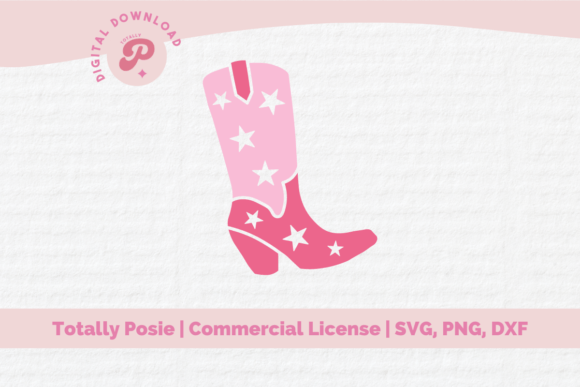
The immediate takeaway from the Cowboy Boot SVG is its strong silhouette. In the world of embroidery, shape recognition is everything. A complex illustration can get lost in the texture of fabric, but a boot has distinct lines that read clearly even at smaller scales. The design exudes a rustic, western mood that feels authentic rather than cartoonish. It doesn’t scream for attention; instead, it offers a grounded, classic aesthetic that fits seamlessly into country-themed or Americana-inspired collections.
Visually, the layout balances negative space with defined edges. This is crucial for both cutting and stitching. When I first opened the file to inspect the vector paths, I noted that the curves are smooth, which suggests that satin stitches along the contours should lay flat without excessive puckering. For an embroidery project intended for custom apparel, this kind of clean geometry reduces the risk of thread breaks and tension issues. It feels like a design meant to be seen, not just stitched.
Real-World Application: The Custom Tote Scenario
To truly test this asset, I imagined a specific client request: a boutique owner wanting a line of branded tote bags for a local farmers market. The brief called for something durable, stylish, and distinctly "handmade." Here is how the Cowboy Boot SVG performed in that hypothetical scenario.
Placing the design on a canvas tote bag immediately elevated the product’s perceived value. Unlike generic text-based logos, an illustrated boot adds character. When applied as an embroidered patch or direct-to-garment style embroidery, it creates a tactile focal point. Customers gravitate toward items that feel curated. The design’s simplicity allows it to stand alone without needing additional embellishments, making it efficient for production. Whether used on a tote bag design for everyday carry or adapted for a sweatshirt embroidery piece for cooler months, the versatility is evident.
I also considered its potential for baby embroidery. While a cowboy boot might seem rugged, stylized versions work beautifully on nursery decor or baby blankets. The clean lines ensure that when scaled down, the image remains recognizable. This adaptability is rare in digital assets, where many designs become muddy blobs when reduced in size.
Technical Performance and Stitch Clarity
When evaluating any machine embroidery design, I always think about stitch density and detail retention. The Cowboy Boot SVG appears to rely heavily on solid shapes, which likely translates well to fill stitches or applique techniques. If treated as an applique design, the outer edge would benefit from a tight satin stitch to prevent fraying, especially on woven fabrics like denim or cotton twill.
However, designers must remain cautious. Even with clean vectors, the final output depends entirely on your machine settings and stabilizer choice. If the original digitization (if applicable) uses too much stitch density, thin fabrics may pucker. Conversely, if the design is sparse, it might look unfinished on heavy materials. I recommend testing the embroidery file on scrap fabric first to gauge how the thread colors interact with your base material. High contrast is key; a dark brown boot on black fabric will disappear, whereas tan or cream threads on navy or olive green will pop.
For those using this as a cut file for vinyl or sublimation, the Cowboy Boot SVG holds up well. The lines are crisp enough for sublimation transfers on mugs or glass cans, ensuring no jagged edges in the final print. But remember, a digital embroidery file and a cut file serve different purposes. Always verify which format you are working with to avoid mismanagement in your production pipeline.
Where Caution Is Required
No design is perfect for every application. There are specific scenarios where the Cowboy Boot SVG might struggle:
- Small Hoop Sizes: If you attempt to stitch this in a hoop smaller than 4x4 inches, fine details may merge together. Keep an eye on the smallest elements, such as stitching lines or decorative accents, to ensure they don’t become indistinguishable blobs.
- Textured Fabrics: On bouclé wool or thick chenille, the definition of the boot’s shape may be lost. Stick to smoother surfaces like cotton, polyester blends, or denim for maximum clarity.
- Curved Surfaces: Applying this to a cap or hat requires careful hooping. The curvature can distort the straight lines of the boot unless you use a proper cap frame and adjust the stitch angles accordingly.
- Stretchy Materials: Knits require a stable stabilizer backing. Without it, the running stitch or satin stitch outlines may stretch out of shape after washing.
Impact on Brand and Customer Trust
In the competitive landscape of Etsy seller shops and craft business ventures, presentation is half the battle. A high-quality finished product builds trust. When customers receive a personalized gift or a small shop product with clean, professional embroidery, they associate that quality with your brand reliability.
The Cowboy Boot SVG supports this professionalism. It avoids clutter, allowing the craftsmanship to shine. This is particularly important for commercial embroidery projects where volume matters. A design that is easy to execute consistently reduces waste and rework, directly impacting your bottom line. Furthermore, its thematic appeal makes it highly giftability-focused, whether for birthdays, holidays, or wedding favors.
Practical Designer Notes for Implementation
Before committing to a full production run, follow these steps to ensure success:
- Test on Scrap Fabric: Never assume a design works on all materials. Test the embroidery project on the exact fabric you plan to sell.
- Check Thread Contrast: Use black and white mockups to visualize contrast. Ensure the thread colors provide enough separation from the background.
- Review Stabilizer Needs: Heavy fill areas may need tear-away or cut-away stabilizers depending on the fabric weight.
- Inspect Small Details: Zoom in on the vector paths. Are there tiny islands of color that might cause threading issues?
- Confirm Licensing: If you are selling design assets or finished goods, double-check the commercial use rights. Some graphics allow personal use only.
Ultimately, the Cowboy Boot SVG is a versatile, visually appealing asset that serves both hobbyists and professionals well. Its strength lies in its clarity and thematic resonance. By paying attention to technical execution—hoop size, stabilizer choice, and thread selection—you can transform this simple graphic into a premium handmade product that stands out in any market. It is a reliable addition to your library of graphics for anyone looking to add a touch of western charm to their embroidery project portfolio.